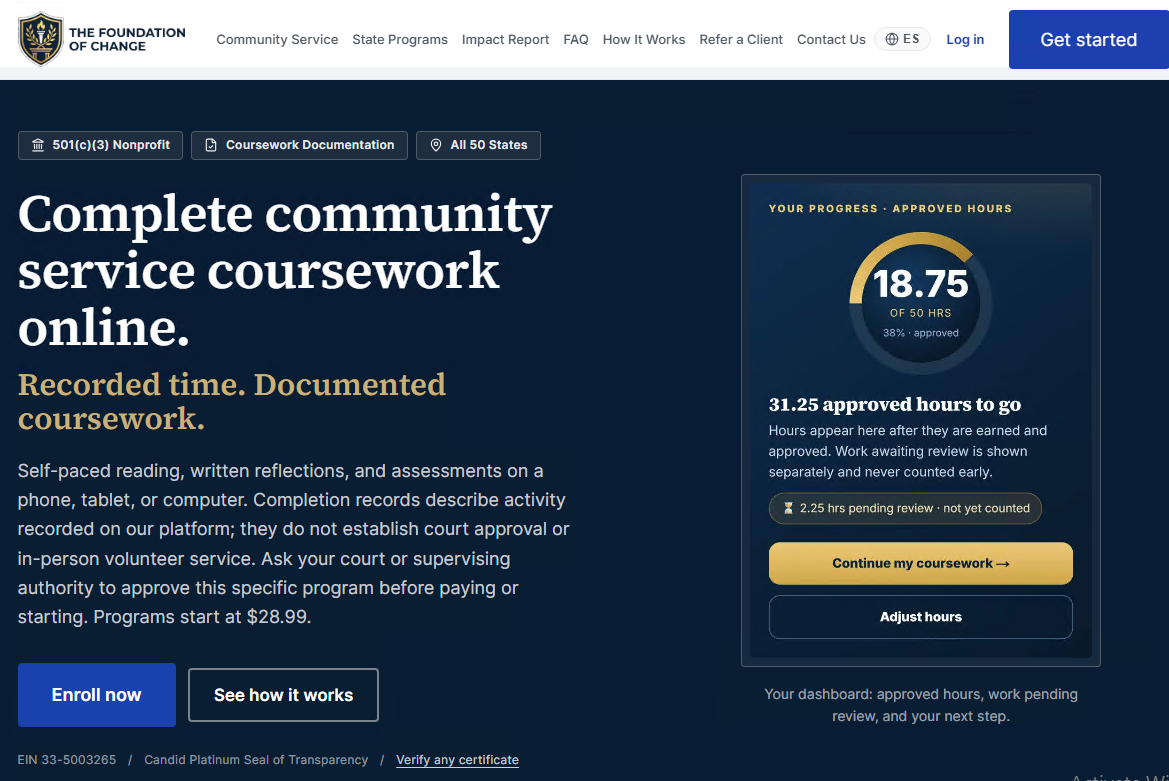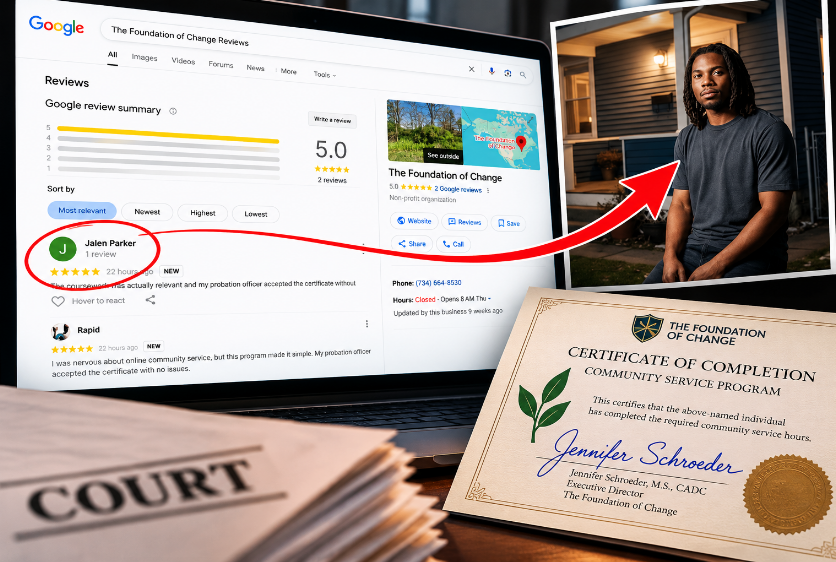
 The director of The Foundation of Change in Michigan, Jalen Parker, presents his online website as a way for people to complete court-ordered community service. But the organization's model raises a basic question: when participants pay for access and ultimately receive computer-generated community-service documentation, what exactly is being sold?
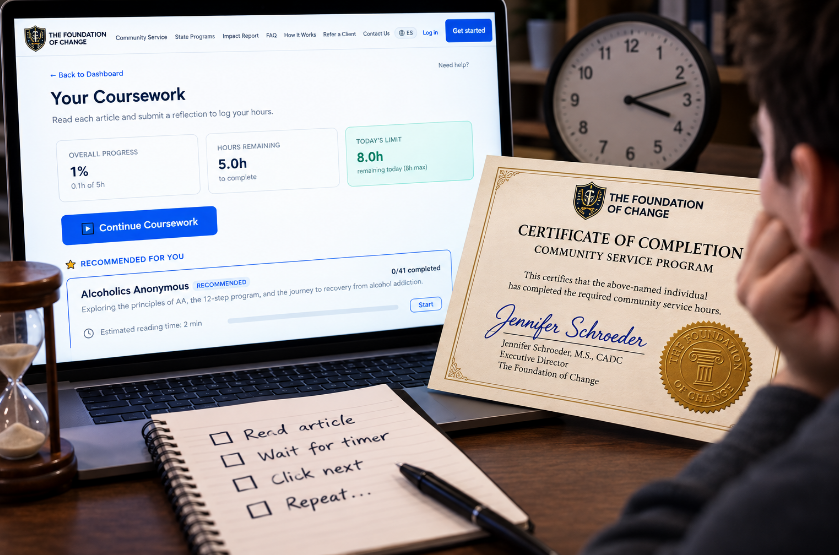
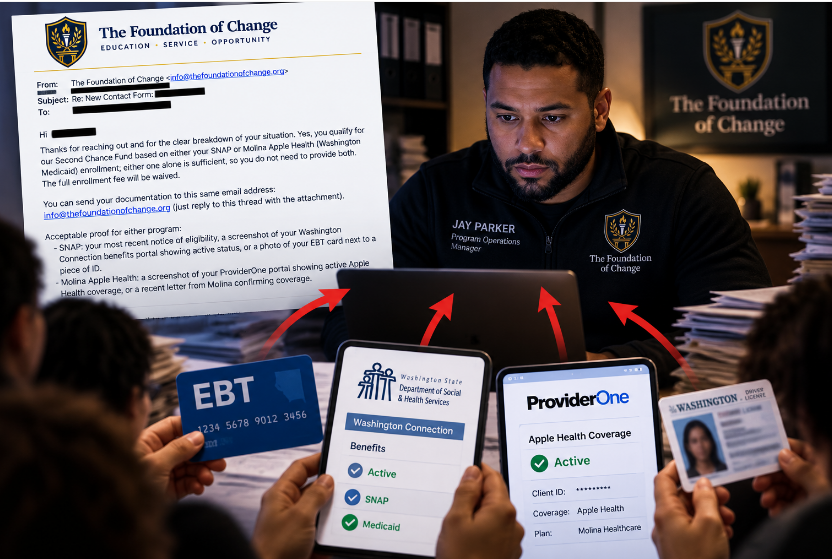
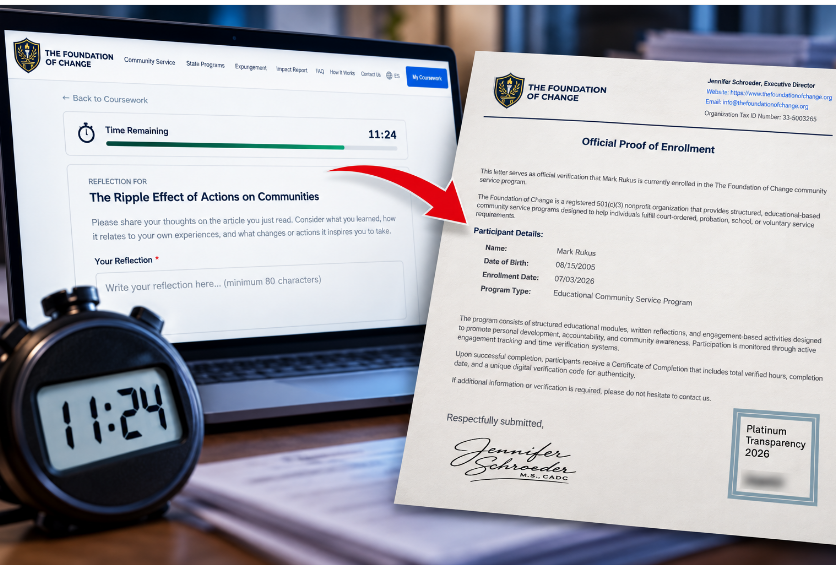
"Change Make Dollars" is a quote from an article published in 2025 about The Foundation of Change. Records reviewed by Activist Legal show that participants select the number of community-service hours they need, spend time within the organization's online system, pay the applicable fee, and can ultimately receive documentation representing that community service as completed. The Foundation describes the activity as structured educational community service and says its system verifies participation through server logs and other safeguards.
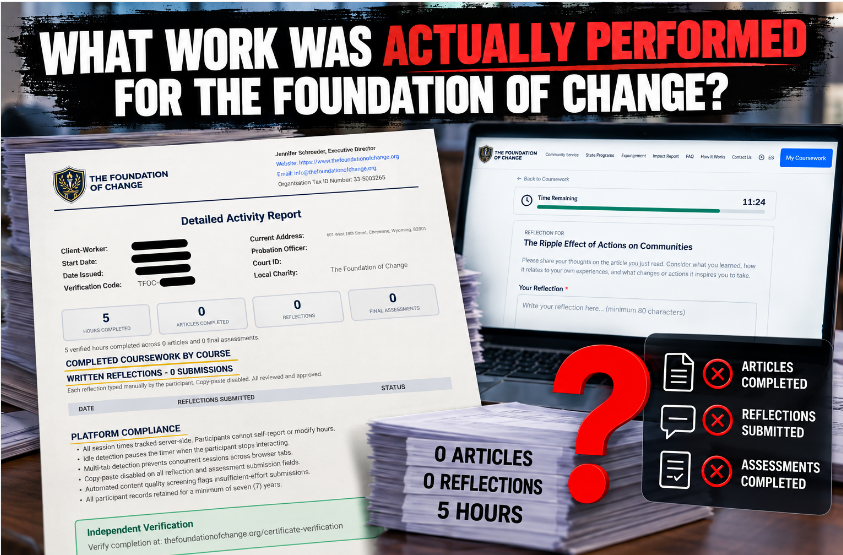
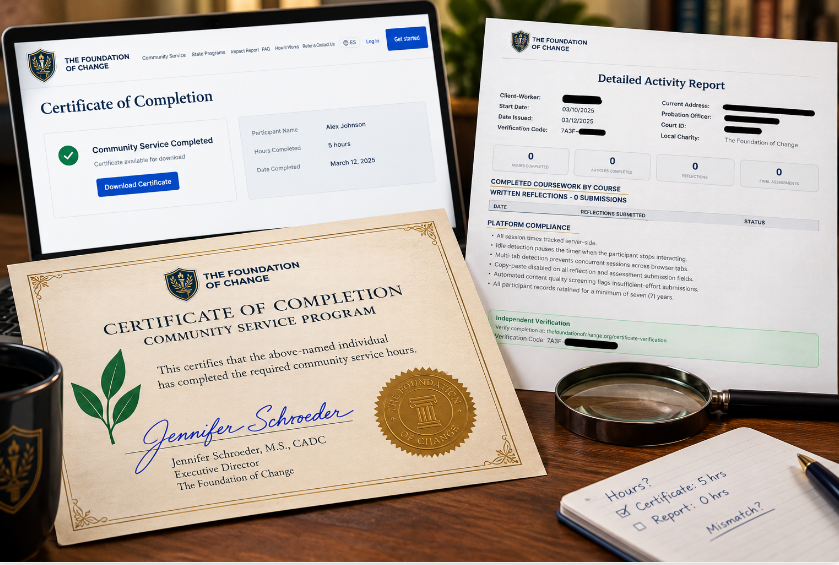
But records associated with the program have raised questions about how much actual activity is necessary to produce those hours. In one documented example previously reviewed by Activist Legal, a participant's activity report credited five verified hours while showing zero completed articles, zero reflections and zero final assessments. The resulting documentation nevertheless represented five hours of completed service.
View this video from 2026 showing that you can earn time with The Foundation of Change without having to do ANYTHING...
And here is a youtube video posted in 2025 that touts that you don't have to do ANY work:
That makes the organization's name unusually fitting for its business model: The Foundation of Change makes change — and that change makes dollars.
The Foundation charges participants according to the number of hours requested. Those payments support an organization recognized as a tax-exempt charity, while the resulting certificates and service records may be presented to courts, probation departments and other institutions as evidence that community-service obligations have been completed.
The issue is not simply that the Foundation charges a fee. Nonprofit organizations can legitimately charge program fees. The more important question is what participants actually do in exchange for the community-service hours appearing on their records—and what is independently verified before those records are generated.
When a document represents that someone completed community service, the distinction between paying for access to a program and performing the service represented on the resulting certificate matters.
For courts relying on those documents, that distinction may matter considerably more than the change collected along the way.