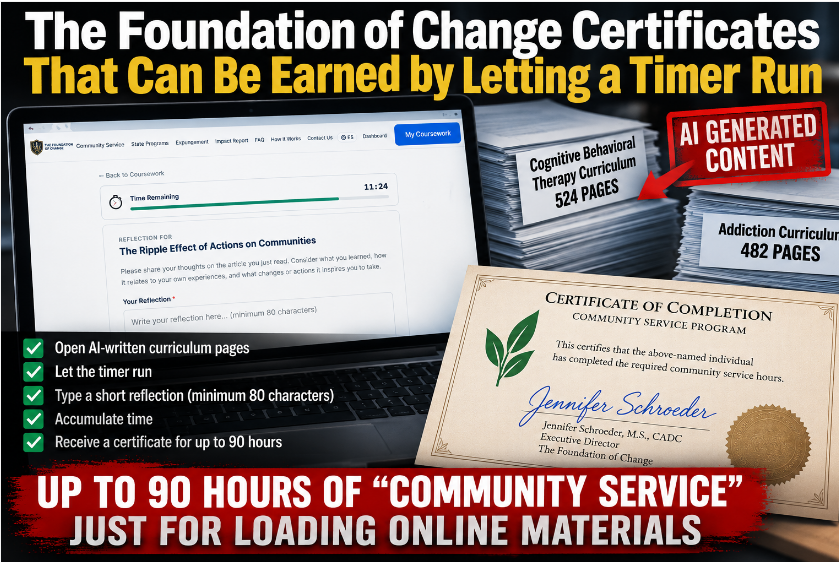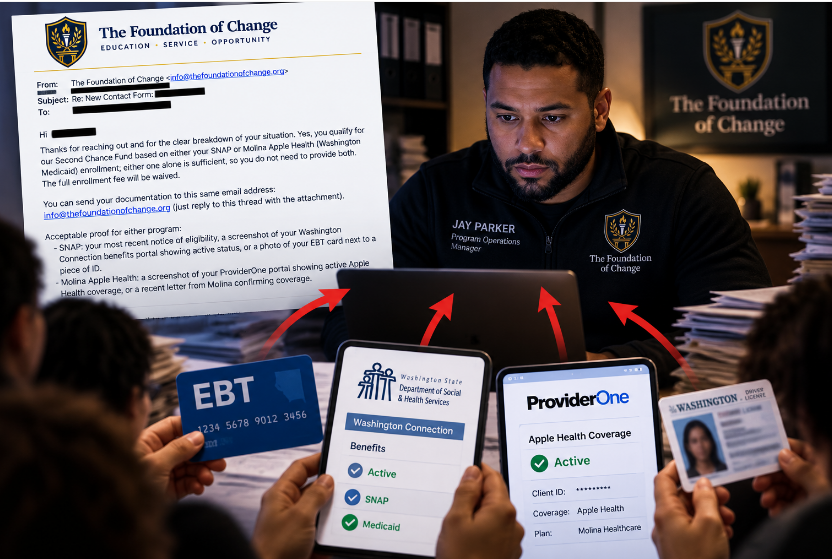
 A person signs up for online community service. A timer starts. Minutes begin accumulating toward a required number of service hours.
But what happens if the person simply waits?
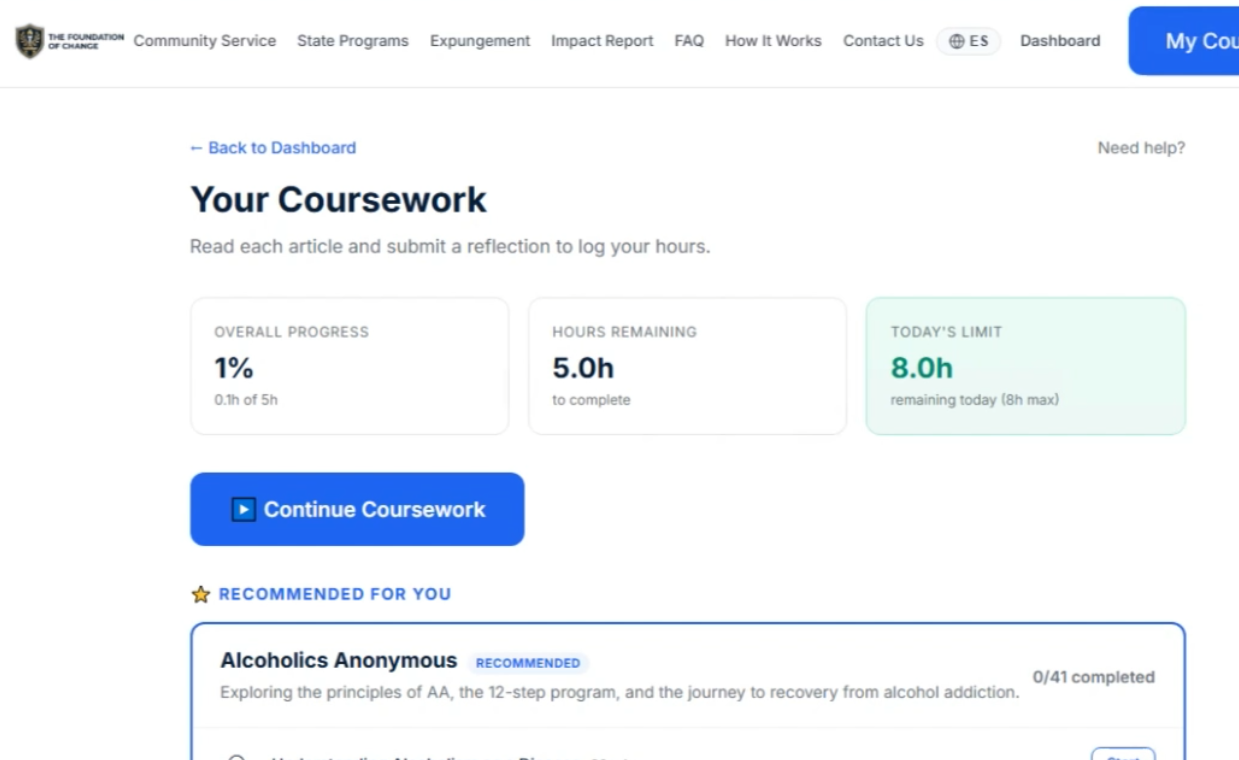
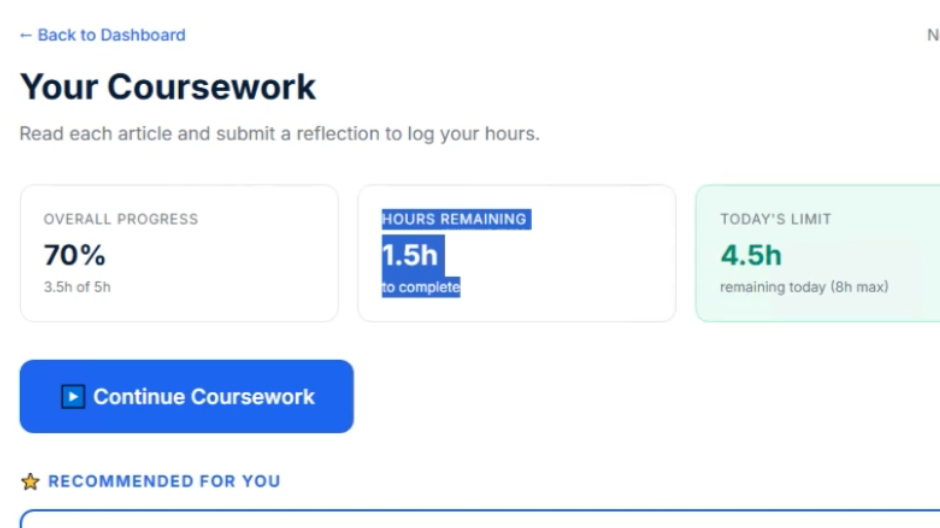
View this video showing that you can earn time with The Foundation of Change without having to do ANYTHING...
That question is at the center of a continuous screen recording preserved as evidence in a complaint concerning The Foundation of Change, an organization that offers online community-service programs and documentation that participants may present to courts, probation departments and other institutions.
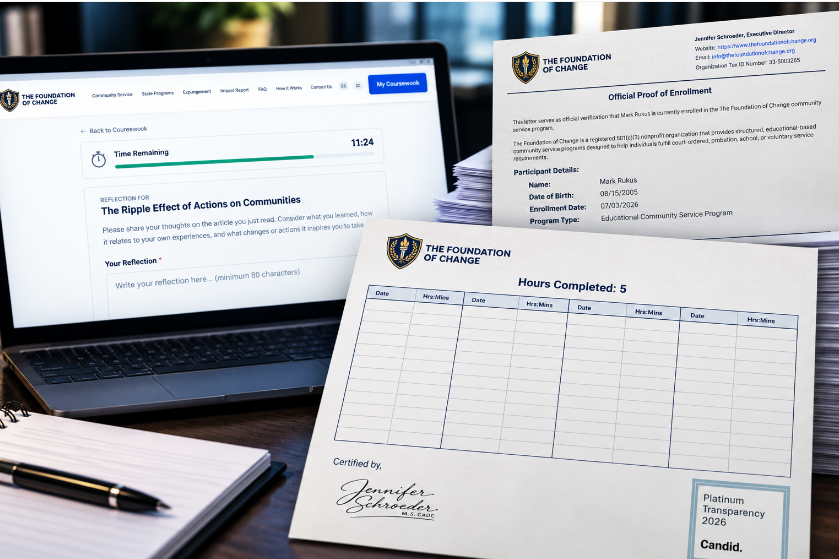
According to the complaint, the recording captures an ordinary participant account using the system without modifying the website, altering its code or bypassing its controls. The complaint says the participant was able to load the relevant webpage, perform no substantive charitable work and nevertheless allow time to continue accumulating toward the service requirement.
That allegation matters because it is difficult to reconcile with how The Foundation of Change has described its system.
And here is a youtube video posted in 2025 that touts that you don't have to do ANY work:
A System Supposedly Designed to Prevent Waiting
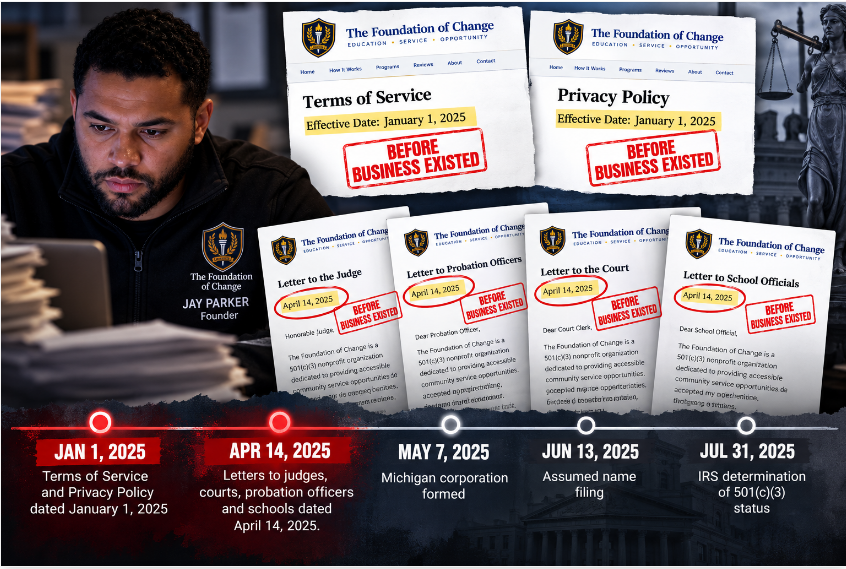
According to materials preserved with the complaint, The Foundation of Change describes what it calls a “6-Point Anti-Fraud Architecture.”
Those materials reportedly say active participation is mandatory and describe safeguards intended to prevent participants from receiving credit merely for leaving a webpage open.
Among the represented safeguards: the timer pauses when a browser is minimized or the participant changes windows; a ten-minute inactivity timeout prevents someone from simply leaving a tab open; concurrent coursework is blocked; daily hours are limited; and reflection boxes remain unavailable until required reading time has elapsed.
The Foundation's court-verification materials go further, according to the complaint, describing written assessments, minimum reflection requirements, cognitive-engagement screening, server-side records and time histories intended to document participant activity. Its Terms of Service and FAQ are also described as requiring coursework and reflections while actively monitoring inactivity.
Those are important representations if the resulting documentation is going to be used to establish that somebody actually completed community service.
The recorded test raises the opposite possibility.
The Test Used an Ordinary Account
The significance of the recording described in the complaint is how unremarkable the test allegedly was.
It did not involve manipulating the timer.
It did not involve changing JavaScript, modifying a database or exploiting an administrative account.
The complaint says the entire ordinary-user process was continuously screen-recorded and that the participant did not bypass the platform's controls or alter its code. Yet the relevant webpage allegedly continued accumulating credited service time while no substantive charitable work was being performed.
The recording itself is identified in the evidentiary materials as Exhibit Y, “Continuous screen recording of ordinary participant workflow,” and was supplied separately because of its file size.
That distinction is critical. A security system can be defeated by someone deliberately circumventing it without proving that the system fails during ordinary use.
The allegation here is different: the complaint contends that passive time accumulation occurred through the normal participant workflow.
The Records Raise the Same Question
The recording is not the only evidence cited in the complaint.
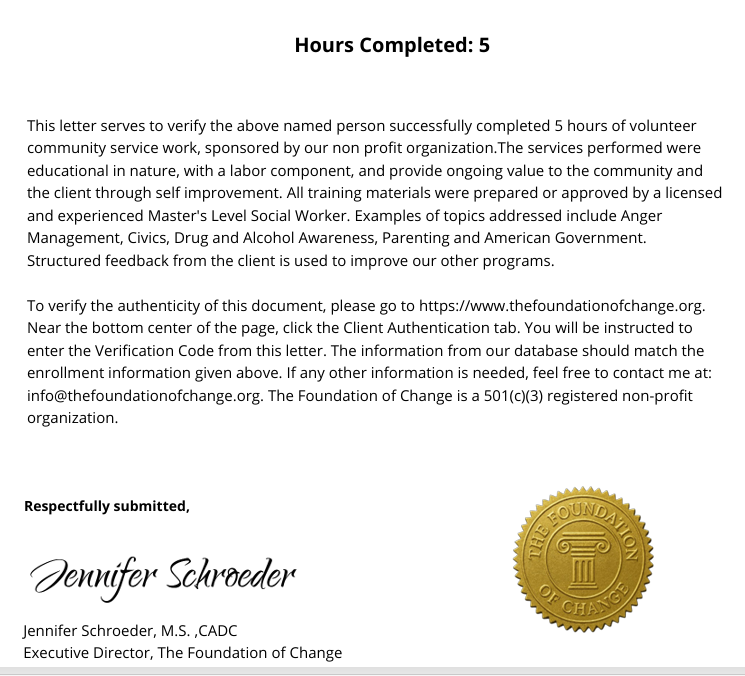
Participant records preserved separately show an account credited with five verified hours while its Detailed Activity Report recorded zero articles completed, zero reflections and zero final assessments.
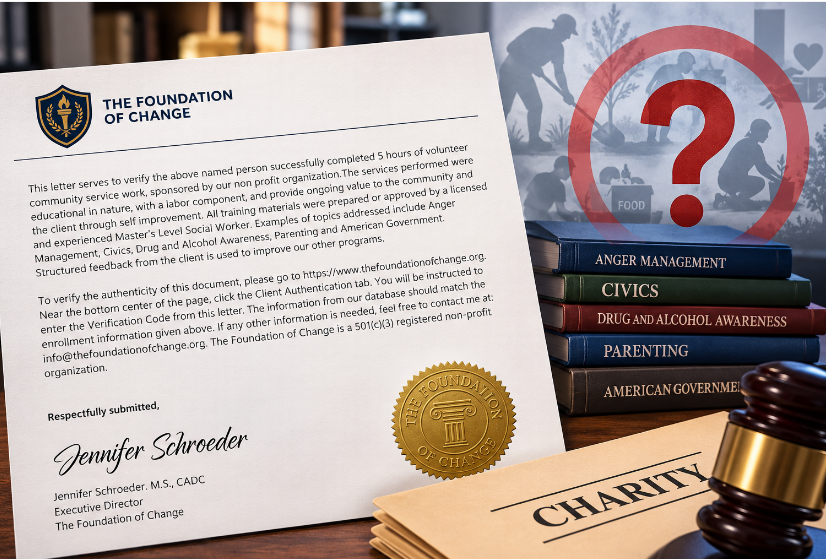
Yet the corresponding completion statement represented five hours of structured educational community service and described guided coursework that included written reflections. An associated hour log likewise recorded five completed hours.
Those records do not independently establish exactly what happened during every minute of those five hours. But when considered alongside the alleged ordinary-user recording, they raise an obvious verification question: what activity was the system actually measuring when it classified those hours as verified?
Elapsed Time Is Not Necessarily Service
There is nothing inherently improper about community service being performed online. A legitimate remote program could require real work, document that work and accurately record the time spent performing it.
The issue raised by the Foundation records is narrower.
A clock can establish that time passed.
It cannot, by itself, establish what somebody did while that time was passing.
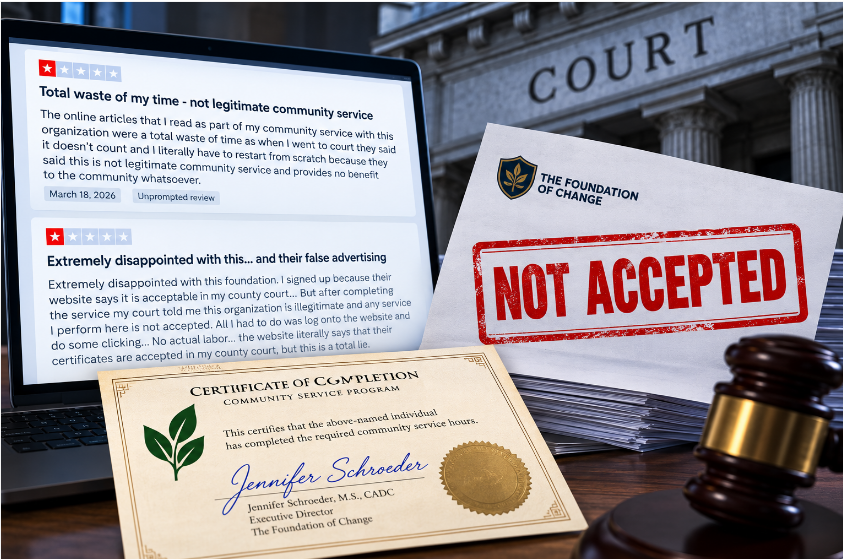
That distinction becomes particularly important when the resulting record is intended for a judge, probation officer, school or other institution trying to determine whether a service obligation was actually completed.
The Foundation's own public representations, as described in the complaint, appear to recognize this problem. That is precisely why its claimed inactivity monitoring, participation requirements, reflections and other safeguards matter.
If those controls operate as represented, they could provide evidence that recorded time corresponds to actual participation.
If passive waiting can instead produce credited time, the meaning of a “verified hour” becomes considerably less clear.
What the Establishes
The evidence described in the complaint presents a testable factual issue.
The Foundation has reportedly represented that its system prevents passive completion and that its certificates reflect monitored, verifiable engagement. The preserved recording is offered as evidence that an ordinary participant could do precisely what those safeguards were supposed to prevent: allow the clock to run without performing substantive charitable work.
The underlying software and server records could provide an even clearer answer. They could show exactly what actions were required for time to accrue, when inactivity controls activated, what participant events were recorded and what activity the system required before issuing completion documentation.
Those are technical questions capable of being tested against the production system and its historical records.
But the continuous recording presents a much simpler question first:
If a participant can earn community-service time by doing little more than waiting for a clock to run, what exactly is being certified as community service?