
Someone in California searching for court-approved community service can encounter a page telling them The Foundation of Change is accepted across California.
Someone in Florida can find substantially the same message tailored to Florida.
In Nevada, the organization presents itself as accepted by courts throughout that state.
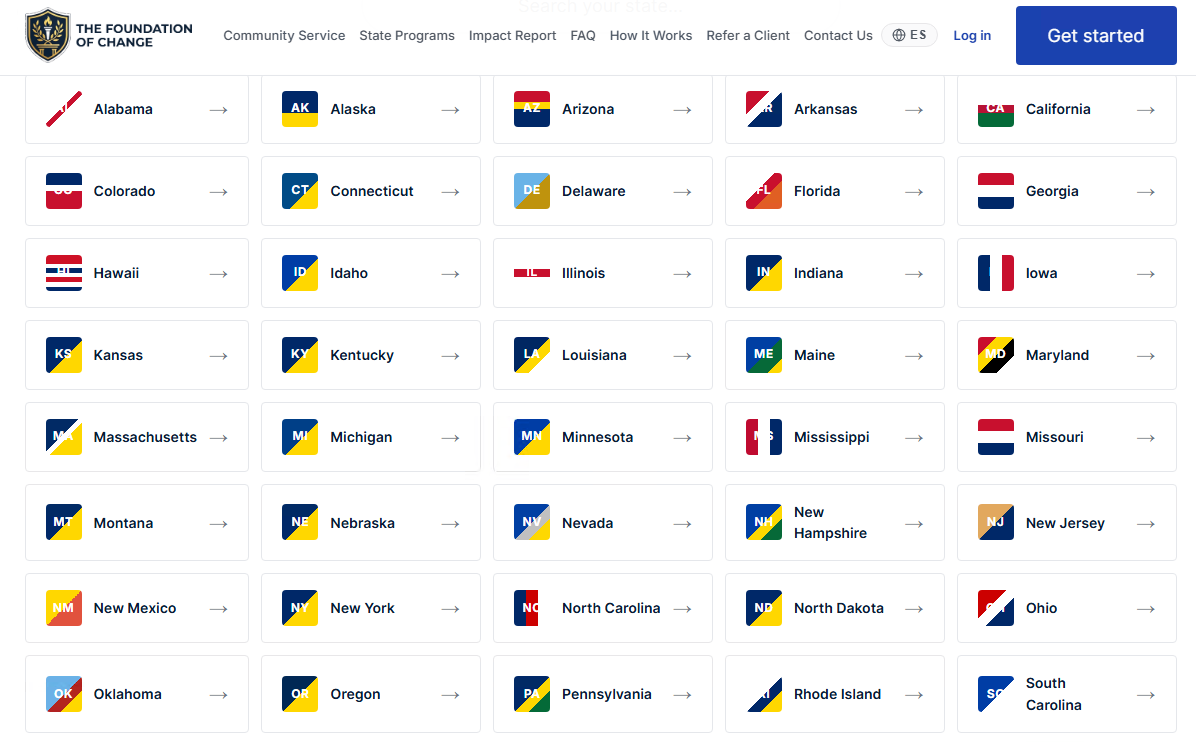
Behind those pages is a broader national marketing strategy documented in a regulatory complaint: state-specific and county-specific webpages designed to present The Foundation of Change as a locally accepted option for people searching for court-ordered community service.
The marketing ultimately extends much further.
Preserved website metadata reportedly describes the program as “accepted in all 50 states.”
One Program, Hundreds of Local Markets
The Foundation of Change operates online, meaning it does not need a physical community-service operation in every jurisdiction where it seeks customers.
Instead, its website can create pages targeted toward individual states, counties and court-related searches.
The regulatory complaint describes a United States directory connected to individualized state pages that enumerate counties and use geographically specific language aimed at people searching for community-service options in their jurisdictions. A separate fraud complaint similarly alleges that these pages are used to capture searches related to court-ordered community service and direct visitors toward the Foundation's paid program.
The result is that a national online operation can appear highly localized.
A California resident doesn't simply encounter a generic national program.
They encounter California.
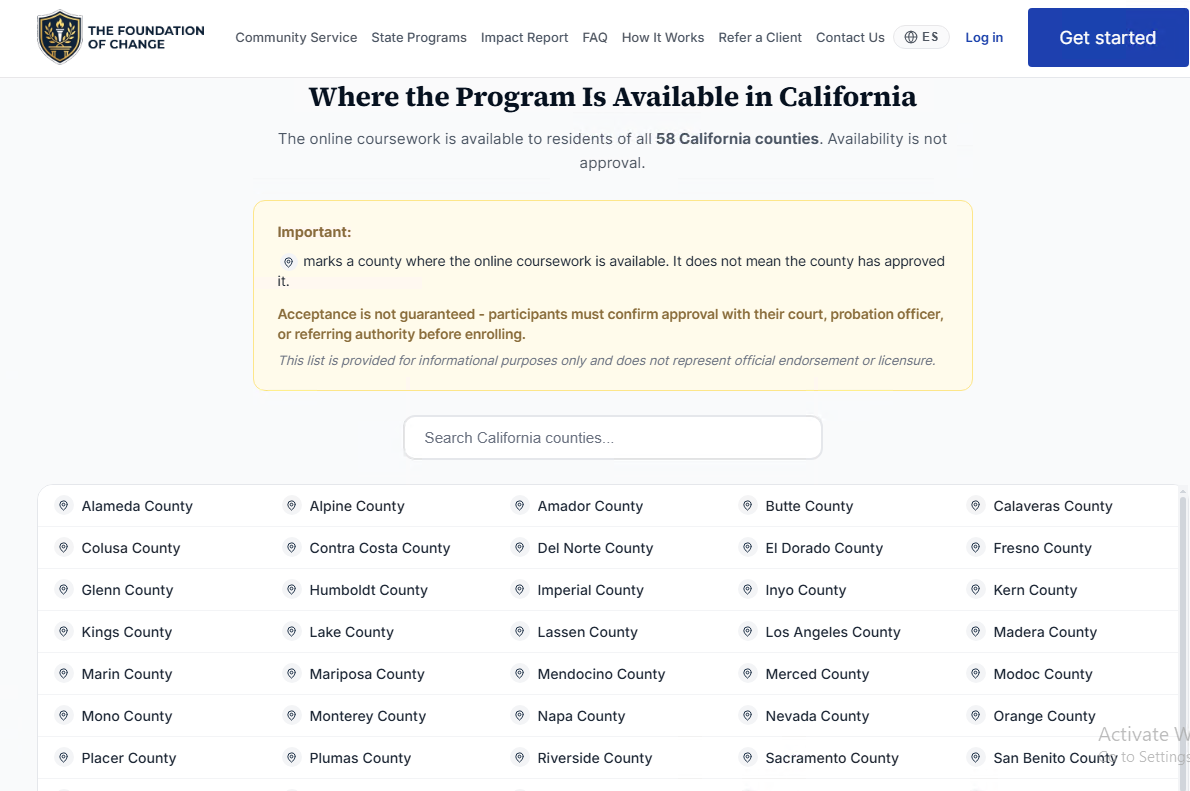
California: “Accepted Across All 58 Counties”
The preserved California page makes particularly broad representations.
According to the regulatory complaint, it describes The Foundation of Change as a “verified 501(c)(3) nonprofit accepted by California courts and probation departments.”
It reportedly states:
“Accepted Across All 58 Counties.”
The page also displays “Court-Approved,” “Probation-Compliant” and “California Accepted” badges and represents that the program is accepted by California Superior Courts throughout the state's 58 counties.
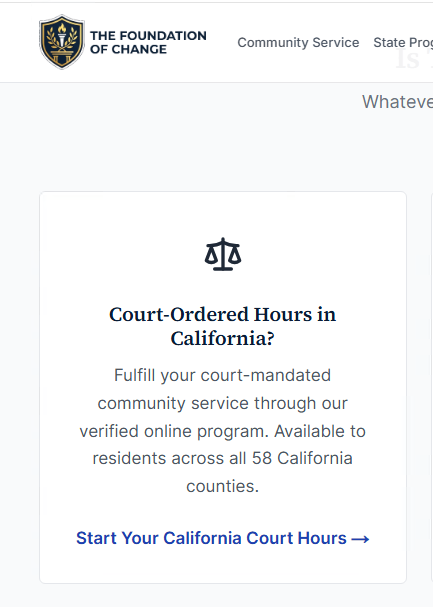
Those statements give a prospective participant searching from California a strong impression of statewide institutional acceptance.
Florida visitors receive a similar message.
Florida: “Trusted Across All 67 Counties”
The Foundation's preserved Florida page follows essentially the same structure.
According to the complaint, the page represents that the Foundation is accepted by Florida courts and probation departments and describes the program as:
“Trusted Across All 67 Counties.”
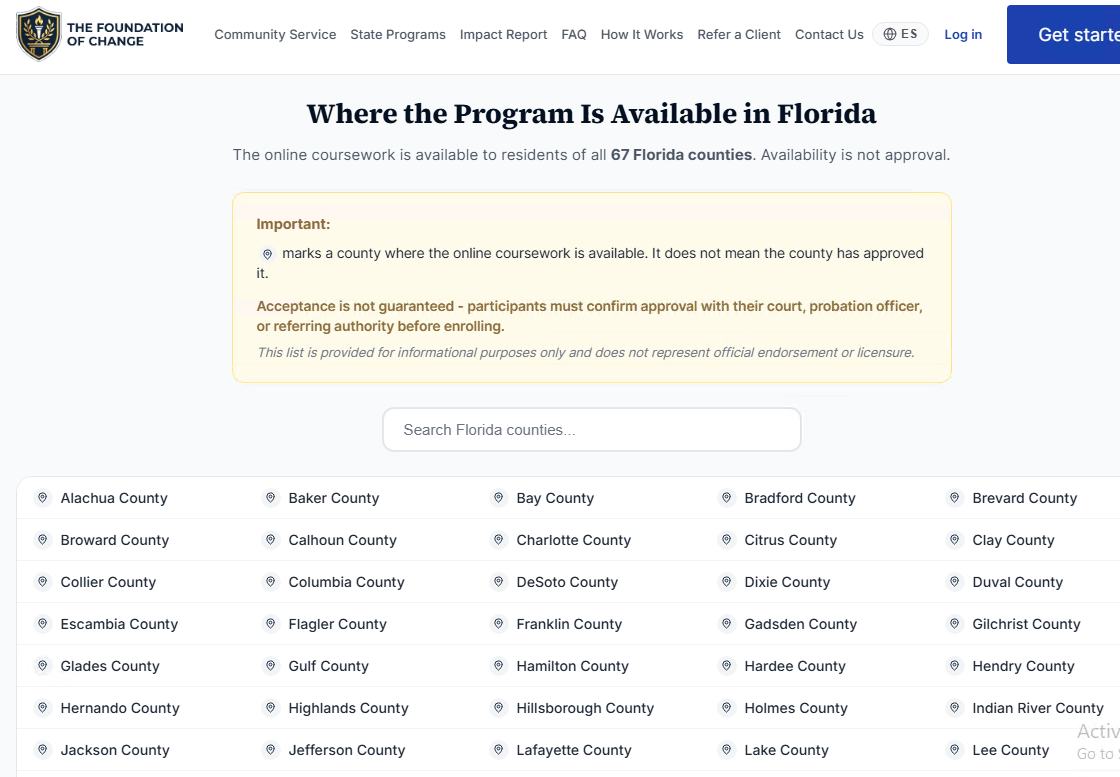
It reportedly displays “Court-Approved,” “Probation-Compliant” and “Florida Accepted” badges.
The page goes further, stating that Foundation certificates are accepted by Florida probation departments and that its verified hours satisfy Florida legal requirements.
Then the geography changes again.
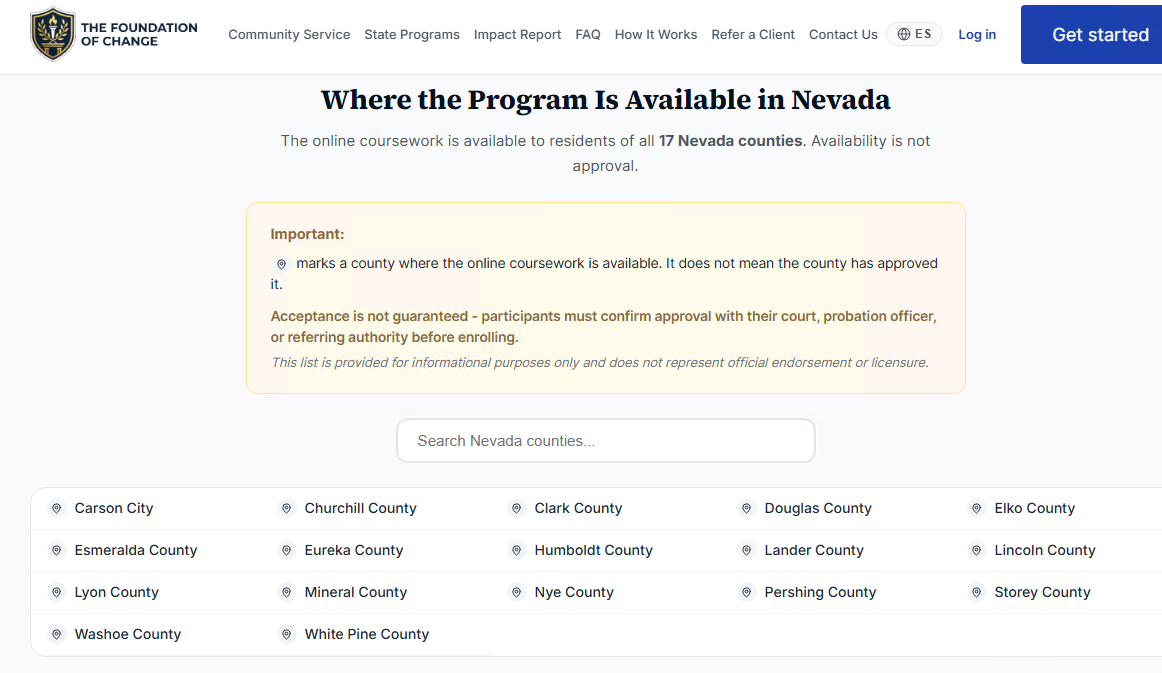
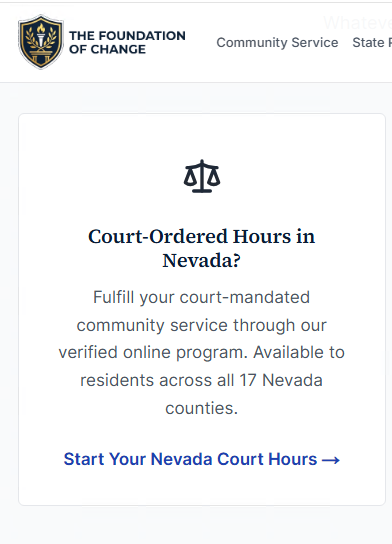
Nevada: All 17 Counties
The Nevada page reportedly follows the same national template.
There, The Foundation of Change displays “Court-Approved,” “Probation-Compliant” and “Nevada Accepted” messaging and represents that its program is accepted by Nevada courts, probation officers and schools.
The page reportedly says the program is accepted by district, justice and municipal courts throughout all 17 Nevada counties.
But the Nevada page also exposes an important contradiction in the marketing strategy.
Elsewhere on the same page, an FAQ reportedly says that “many” Nevada courts accept online community service and recommends confirming acceptance with the participant's particular court.
“Accepted across all 17 counties” and “check with your court” convey very different levels of certainty.
Paid Google Ads Reinforce the Message
The geographic webpages aren't the only way the Foundation markets the program.
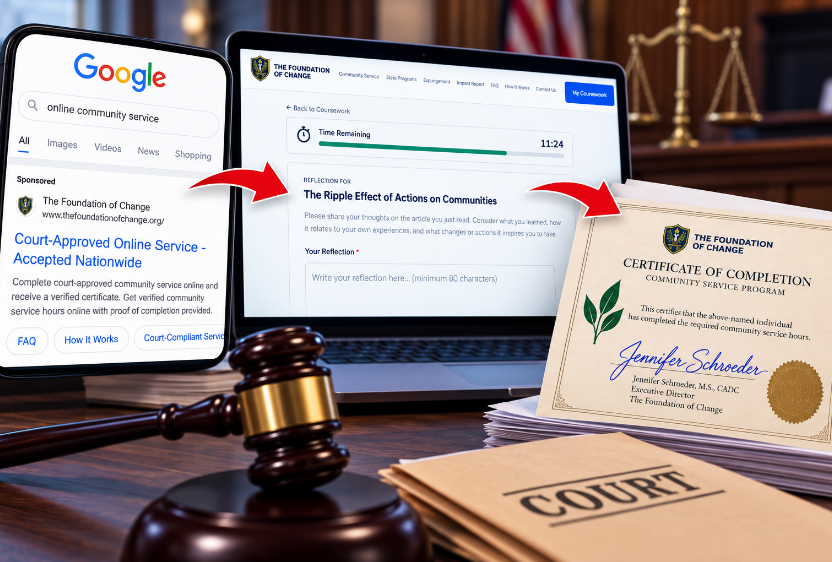
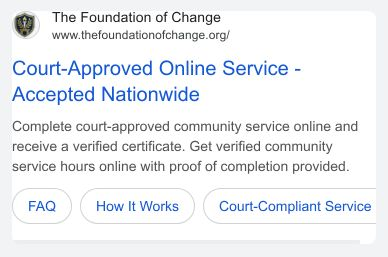
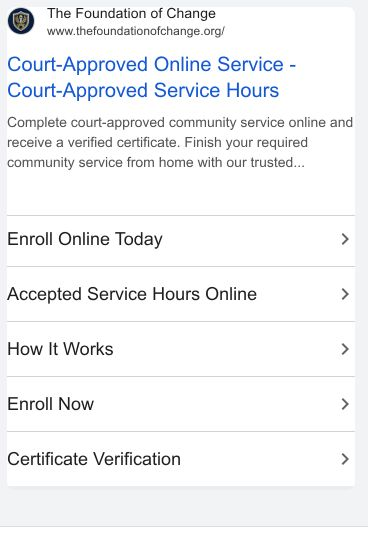
The evidence compilation includes screenshots from Google's Ads Transparency Center preserving paid advertisements that expressly marketed the program using phrases including:
“Court-Approved Online Service”
and
“Court-Approved Service Hours.”
That means a person actively searching for a way to satisfy a court requirement could encounter a paid advertisement emphasizing court approval, followed by a state-specific webpage emphasizing acceptance in that person's jurisdiction.
The combination is powerful.
The advertisement establishes the idea of court approval.
The landing page localizes it.
And the state and county references can make a national online service appear connected to the institutions where the participant actually needs the certificate accepted.
The Same Formula Can Be Repeated Nationwide
The complaint argues that these are not isolated informational pages.
It describes repeated state-specific titles, descriptions, keywords, county counts, court references and acceptance language as part of a systematic search-engine strategy targeting people searching for court-approved community service in particular jurisdictions.
That structure is highly scalable.
The organization doesn't need to establish a physical operation in every county.
A website template can change the state name, county count and geographic references while continuing to market the same underlying online program.
The Foundation's preserved metadata then expands the proposition nationally by stating that the program is accepted in all 50 states.
The Question Is What Supports the Acceptance Claims
There is nothing inherently improper about a nonprofit operating nationally or creating webpages explaining its services in different states.
The important issue here is narrower: what evidence supports the representations of court and probation acceptance?
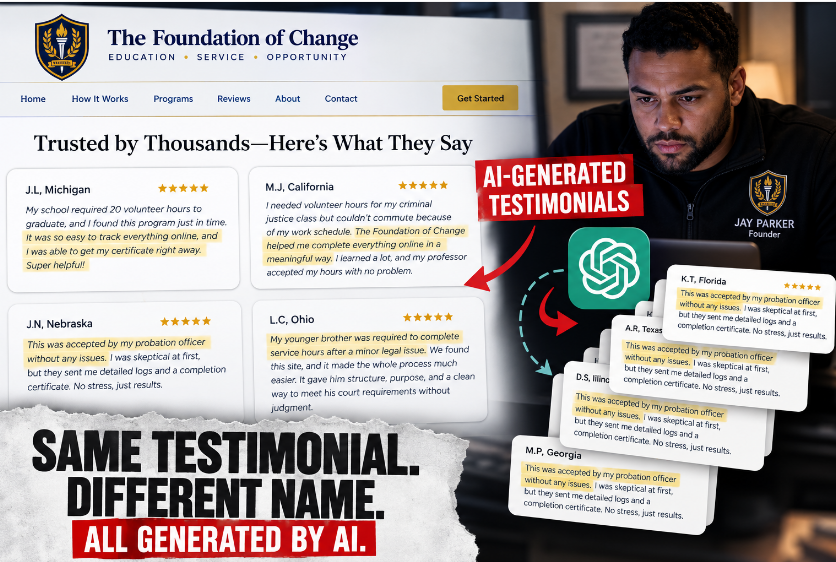
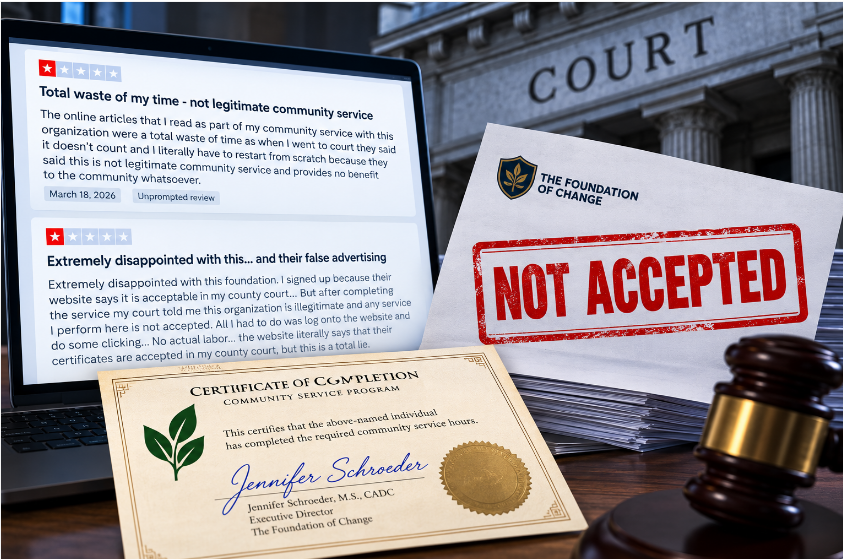
That question becomes more significant because preserved consumer reviews reportedly describe customers who relied on acceptance representations and subsequently had their certificates or hours rejected.
One reviewer reportedly said a court determined that the activity did not count and required the service hours to be restarted. Another said the website represented acceptance in the person's county, but the court rejected the program. A verified review involving Clark County, Nevada similarly disputed the Foundation's acceptance claims.
Those reviews are allegations by individual consumers, not findings by a court or regulator.
But they identify something investigators can verify directly.
The regulatory complaint therefore asks investigators to determine which courts actually approved the Foundation's program and obtain the written approvals supporting its advertising representations.
That would separate marketing language from documented institutional acceptance.
Because creating a webpage for every state is easy.
Proving that the courts in those states actually approved the program is something else entirely.